
In the Sensex pack, Hero MotoCorp, IndusInd Bank, Bajaj Auto, Maruti and M&M were the top gainers, spurting up to 2.66 per cent.
The continuing global uncertainity has complicated the fight against inflation, opined Reserve Bank Deputy Governor Michael Debabrata Patra during the Monetary Policy Committee meeting held on February 8. According to the minutes of the MPC meeting released on Wednesday, RBI Governor Shaktikanta Das also mentioned that there is considerable uncertainty due to a host of global factors such as rising non-oil commodity prices. The RBI on February 8 hiked the key short-term lending rate by 25 basis points to 6.5 per cent, citing sticky core inflation.

India's manufacturing sector growth eased slightly in July, on softer increases in new orders and output, while cost pressures and demand strength led to the steepest increase in selling prices since October 2013, a monthly survey said on Thursday. The seasonally adjusted HSBC India Manufacturing Purchasing Managers' Index (PMI) moderated slightly from 58.3 in June to 58.1 in July.

The Reserve Bank of India's (RBI) Monetary Policy Committee's (MPC) decision to cut the repo rate by 50 basis points (bps) to 5.5% was contrary to the expectations of many economists. Firstly, most of the economists expected the MPC to cut the repo rate by 25 bps citing the weakening of inflation, prospects of economic growth, geopolitical uncertainty and comfortable system liquidity.
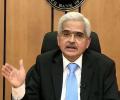
The Reserve Bank is unlikely to cut the benchmark interest rate in its forthcoming bi-monthly monetary policy review later in the week as retail inflation is still a cause of concern, and there is a possibility of the Middle East crisis deteriorating further, impacting crude oil and commodity prices, say experts.

Since Sanjay Malhotra took office as governor in December, the Reserve Bank of India (RBI) has adopted a more accommodative stance, which bodes well for banking and the economy as they navigate a growth slowdown, according to analysts.

Gold prices surged Rs 2,200 to hit a fresh peak of Rs 116,200 per 10 grams in the national capital on Monday buoyed by strong global cues as investors awaited key commentary from US Fed officials for policy direction. According to the All India Sarafa Association, the precious metal of 99.9 per cent purity had closed at Rs 1,14,000 per 10 grams on Friday.

Facing criticism from the government over the central bank prioritising inflation over growth, the new RBI Governor Sanjay Malhotra on Monday said that prospects of the Indian economy are expected to improve on the back of high consumer and business confidence in 2025. "As we strive to preserve financial stability to support a higher growth path for the Indian economy, our focus remains steadfast on maintaining stability of financial institutions and, more broadly, systemic stability," Malhotra said in foreword to the Financial Stability Report.
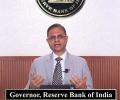
'India has the potential to grow at more than 7%, with the monetary policy providing a supportive hand.'

Here are the highlights of the monetary policy announced by RBI governor Shaktikanta Das on Friday.
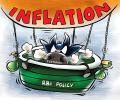
Retail inflation slipped to seven-month low of 3.61 per cent in February mainly due to easing prices of vegetables, eggs, and other protein-rich items, creating space for the RBI to go for another cut in interest rate next month.

The government is likely to name a successor to Rajan sometime this month

India's consumer price index (CPI)-based retail inflation rate is likely to have cooled further in June, thus remaining below the 4 per cent target of the Reserve Bank of India (RBI) for a fifth consecutive month, giving the central bank wiggle room to focus on growth. Economists reckon that the decline is on account of easing prices in various categories of goods, especially food items, and a favourable base effect.
The RBI under former governor Shaktikanta Das resisted pressures to cut interest rates through 2024 as it kept its 'Arjuna's eye' trained on inflation, but the central bank under a new detail-oriented head will soon have to take a call if it can continue sacrificing growth. Das, a career bureaucrat who in 2016 oversaw Prime Minister Narendra Modi's highly disruptive demonetisation move, left a lasting legacy as he demitted office towards the end of 2024 after expertly navigating monetary policy for six years, the highlight of which was steering India's recovery through the pandemic.
The RBI's Monetary Policy Committee brainstormed the impact of any future shocks on the inflation trajectory and stressed monitoring the cumulative effect of monetary policy actions over the past one year, which is still unfolding, revealed minutes of the rate-setting panel released on Thursday. The minutes of the meeting of the Monetary Policy Committee (MPC), headed by Reserve Bank Governor Shaktikanta Das, also indicated it would be premature to declare an end to the monetary tightening cycle, which started in May 2022 to check high inflation following the outbreak of the Russia-Ukraine war. The central bank, which effected six back-to-back hikes in the key short-term lending rate (repo) since May 2022 to check high inflation, decided to take a pause early this month.

Even as the high inflation figure for October has ruled out any possibility of a rate cut by the Reserve Bank of India's (RBI's) monetary policy committee (MPC) in December, a rate cut in February also looks uncertain due to global uncertainties. Economists told Business Standard that unless domestic growth slows markedly, the outlook on rate cut remains unclear. India's headline inflation touched a 14-month high of 6.2 per cent in October, breaching the MPC's upper tolerance band of 6 per cent.
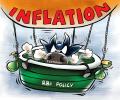
The Reserve Bank of India on Thursday marginally lowered its inflation projection for the current financial year to 5.1 per cent, as Governor Shaktikanta Das said the central bank's monetary policy actions are yielding the desired results. In April, the Reserve Bank had estimated the consumer price index (CPI) based retail inflation at 5.2 per cent during the fiscal 2023-24. CPI inflation fell sharply to 4.7 per cent in April 2023, from 6.4 per cent in February, on the back of favourable base effects, with softening observed across all the three major groups.

The Urjit Patel committee on monetary policy framework has proposed setting up of a monetary policy committee (MPC) that will be headed by the Reserve Bank of India (RBI) governor and accountable for achieving inflation target set by it.

'A possible post-election growth momentum may be lost.'

'Maintain a balanced approach with a preference for short-to medium-duration funds.'
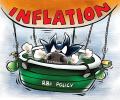
The Reserve Bank of India on Friday raised the retail inflation target for the current financial year to 5.7 per cent on the back of rising global prices amidst the ongoing geo-political tensions, even as it expected the prices of cereals and pulses to soften on prospects of good winter crop harvest. "Global food prices along with metal prices have hardened significantly. "Economy is grappling with a sharp rise in inflation... Inflation is now projected at 5.7 per cent in 2022-23 with Q1 at 6.3 per cent; Q2 at 5 per cent; Q3 at 5.4 per cent and Q4 at 5.1 per cent," RBI Governor Shaktikanta Das said while unveiling the first monetary policy review for the current fiscal year.
The RBI is likely to reduce the key interest rate by 25 basis points this week after keeping it on hold for two years, complementing the Union Budget initiatives to push consumption-led demand, though the sliding rupee continues to be a concern. As the retail inflation has remained within the Reserve Bank's comfort zone (less than 6 per cent) for most of the year, the central bank can take rate action to boost growth hit by sluggish consumption, opined experts.

In a tightening cycle, a premature pause in monetary policy action would be a costly policy error, Reserve Bank Governor Shaktikanta Das opined while voting along with five other members of the MPC for raising the key lending rate by 35 basis points earlier this month, according to the minutes of the meeting released on Wednesday. Prior to the December hike in repo rate, the RBI had raised the key short-term lending rate by 190 bps in four tranche.

The Reserve Bank on Friday retained inflation projection at 4.5 per cent for the current financial year, lower than 5.4 per cent in the last fiscal. Assuming a normal monsoon this year, CPI (consumer price index-based) inflation for the current year is projected at 4.5 per cent, with Q1 at 4.9 per cent, Q2 at 3.8 per cent, Q3 at 4.6 per cent, and Q4 at 4.5 per cent.

RBI's interest rate decision, macroeconomic data, global trends and trading activity of foreign investors are the crucial factors to drive equity markets in a holiday-shortened week ahead, analysts said. Markets would remain closed on Monday for Gandhi Jayanti. "While global cues will continue to dictate trends in local markets, focus will shift to RBI's monetary policy announcement on Friday. "Although the market is expecting a status quo on interest rates, global concerns like rising US dollar index and bond yields coupled with surging crude oil prices continue to weigh on investors' minds.
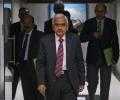
With the 115 bps reduction in repo rate beginning February, banks have already transmitted 72 bps to the customers on fresh loans and some large banks have transmitted as much as 85 basis points.

Moody's Investors Service on Friday raised India's growth projection for 2023 calendar year to 6.7 per cent on account of robust economic momentum. "Strong services expansion and capital expenditures propelled India's 7.8 per cent real GDP growth in the second (April-June) quarter from a year ago. "We have accordingly raised our 2023 calendar year growth forecast for India from 5.5 per cent to 6.7 per cent," Moody's said in its Global Macro Outlook. - el nino

IndusInd Bank was the top gainer in the Sensex pack, rallying over 4 per cent, followed by SBI, Bajaj Finance, Bharti Airtel, Axis Bank, Sun Pharma, HDFC and PowerGrid.

The three day MPC meeting began on Monday and the decision will be announced on Wednesday by RBI Governor Shaktikanta Das.

Analysts at Barclays pitched for a 0.25 per cent cut to generate demand advising the central bank to throw caution to the wind.

Host of lenders led by State Bank of India (SBI) and Bank of India hiked lending rates after the Reserve Bank raised the benchmark interest rate to tame inflation. The hike has been effected in their benchmark rate linked to the repo rate, which increased by half a percentage point to 5.9 per cent. Even financial institutions like mortgage lender HDFC Ltd hiked the lending rate by 50 basis points effective Saturday.
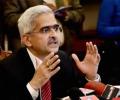
All members of the Monetary Policy Committee (MPC) -- Shashanka Bhide, Ashima Goyal, Jayanth R Varma, Mridul K Saggar, Michael Debabrata Patra and Shaktikanta Das -- had unanimously voted to keep the policy repo rate unchanged at 4 per cent after the three-day meet of the panel earlier this month. Further, except Varma, other members voted to continue with the accommodative stance as long as necessary to revive and sustain growth on a durable basis and continue to mitigate the impact of COVID-19 on the economy, while ensuring that inflation remains within the target going forward. Varma expressed reservations on this part of the MPC resolution, according to the minutes.

Borrowers should consider switching from an MCLR-linked to a repo rate-linked loan.
Reserve Bank of India (RBI) is unlikely to cut the benchmark interest rate at its upcoming monetary policy review meeting, taking place soon after the announcement of the Lok Sabha election results, amid inflation challenges, said experts. The Monetary Policy Committee (MPC) may also refrain from rate cut as economic growth is picking up, notwithstanding the elevated interest rate of 6.5 per cent (repo) prevailing since February 2023. The meeting of the Reserve Bank Governor Shaktikanta Das headed MPC is scheduled for June 5 to 7.
With concern on food inflation ebbing with the monsoon progressing well, the Reserve Bank of India (RBI) is warming up to the idea of a change in stance to "neutral" from "withdrawal of accommodation", according to economists. In his speech on Thursday during the annual event of the Federation of Indian Chambers of Commerce and Industry-Indian Banks' Association, RBI Governor Shaktikanta Das said: "The balance between inflation and growth is well-poised."
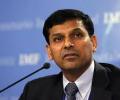
Rajan warned against waiting to act until inflation expectations become entrenched, but also said the Reserve Bank of India would overlook temporary spikes in inflation.

Among the Sensex constituents, 20 stocks ended the session in green with HDFC Bank, Titan, Tech Mahindra, and Asian Paints being the major gainers. TCS, Maruti, Kotak Mahindra Bank and Bajaj Finserve were the other gainers. In contrast, SBI, Bharti Airtel, JSW Steel, PowerGrid, ITC and Reliance closed the trading with losses.
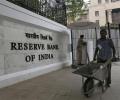
Growth remains weak, inflation is within 2-6% range, rate cut would help recoup forex reserves

State Bank of India, Tech Mahindra, Larsen & Toubro, Tata Steel, Sun Pharma, Infosys, HCL Tech, Axis Bank, Tata Consultancy Services and NTPC were among the biggest laggards among Sensex shares. Nestle, Hindustan Unilever, Titan, Power Grid, UltraTech Cement and ITC were among the gainers.
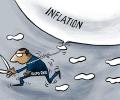
'As the Budget has taken some measures to spur growth, similar action from the MPC may be expected.'
